
Core Beliefs: Hidden Stories That Shape Your Life

Core beliefs are the deeply held, global conclusions you hold about yourself, others, and the world — such as “I am unlovable,” “people cannot be trusted,” or “the world is dangerous.” They form early in life, often before you have the cognitive capacity to question them, and they act as a lens that filters how you interpret everyday events — quietly shaping the automatic thoughts, emotions, and behaviours you experience as “just who I am.”
We all carry stories about who we are. Some of those stories are helpful and flexible: “I’m someone who learns from mistakes.” Others are rigid and harsh: “I am fundamentally not good enough.” The difference between these two kinds of stories often comes down to when and how they were formed — and whether we have ever had the chance to examine them with adult eyes.
What Are Core Beliefs?
In cognitive–behavioural therapy (CBT), core beliefs are understood as our most basic, deeply held ideas about ourselves, other people, and the world. They are global, rigid, and overgeneralised conclusions like “I am unlovable,” “People cannot be trusted,” or “The world is dangerous,” rather than specific thoughts about one situation.
Because core beliefs sit so deep, we usually do not say them out loud or even realise we hold them. Instead, they act like a lens: they filter how we interpret events, which then drives our automatic thoughts, emotions, and behaviours in everyday life.
How Do Core Beliefs Develop?
Core beliefs begin to form early in life, based on a mix of temperament, repeated experiences, and the meanings we make from them. When a child repeatedly encounters certain patterns—such as criticism, inconsistency, neglect, high pressure to perform, or overprotection—those patterns become raw material for global conclusions about “what people are like” and “what I must be like.”
For example, a child who often receives warmth and support when distressed is more likely to internalise beliefs such as “I am worth caring for” and “When I need help, people try to be there.” In contrast, a child who is repeatedly shamed or ignored when distressed may come to believe “My feelings are too much,” “I am a burden,” or “Needing others is dangerous,” even if no one ever says those sentences explicitly. When the global belief that crystallises is “I am bad,” the lived experience often takes the shape of internalized shame — a painful conviction that the whole self is defective, not just one’s behaviour.
In their foundational cognitive model, Beck, Rush, Shaw, and Emery (1979) proposed that depression is maintained by a stable negative cognitive triad — global, often unconscious beliefs about the self (“I am defective”), the world (“nothing works out”), and the future (“nothing will get better”). Decades of CBT research since have continued to support the role of these deep schemas in the persistence of depression and anxiety.
What Is the Relationship Between Core Beliefs and Schemas?
Different therapeutic models use slightly different language: CBT often talks about “core beliefs” or “schemas,” while schema therapy refers to early maladaptive schemas. Despite the terminology differences, they all describe broad, enduring patterns that include memories, emotions, bodily sensations, and cognitions about oneself and relationships.
Young’s schema theory proposes that early maladaptive schemas develop when core emotional needs—such as secure attachment, autonomy, realistic limits, spontaneity, and self-expression—are not adequately met. These schemas then organise how we perceive later experiences and are maintained through processes like schema maintenance (looking for evidence that confirms the schema), avoidance (numbing or blocking reminders), and overcompensation (acting in the opposite direction of the schema to cope).
How Do Core Beliefs Show Up in Everyday Life?
Core beliefs rarely appear in their raw form in daily thoughts. Instead, they influence intermediate beliefs (rules, assumptions, and attitudes) and automatic thoughts—the quick interpretations that flash through your mind in response to events.
For example:
- Core belief: “I am inadequate.”
- Intermediate belief: “If I don’t perform perfectly, people will see how incompetent I am.”
- Automatic thought after a small mistake: “I’ve messed everything up. They’ll realise I shouldn’t be here.”
Or:
- Core belief: “I am unlovable.”
- Intermediate belief: “If someone really gets to know me, they will leave.”
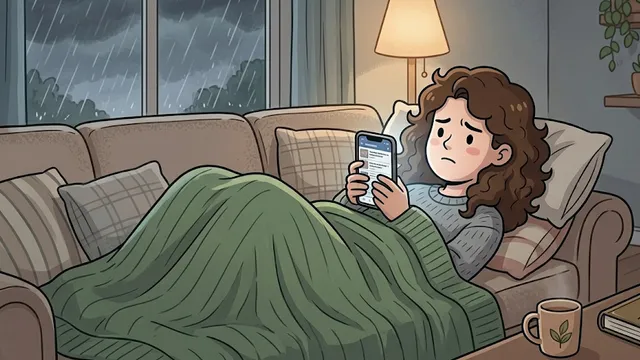
- Automatic thought when a message is left on read: “They’re losing interest; I knew this wouldn’t last.”
Over time, these patterns can contribute to and maintain problems such as depression and anxiety — and when the core belief is about worth, they often create the exhausting cycle described in conditional self-worth. Cognitive models of depression emphasise that negative core beliefs about the self, the world, and the future (the “cognitive triad”) bias how people process information and make them more likely to interpret ambiguous events in a pessimistic way.
Why Are These Beliefs So Hard to Change?
Core beliefs typically feel like “truth” rather than opinions. They were often formed before we had the cognitive capacity or safety to question them, and they have been rehearsed—implicitly and explicitly—for many years. Because of this, evidence that seems to support a negative belief is noticed and remembered, while evidence that contradicts it is often discounted or forgotten (for example, “They were just being nice,” “That success was luck”).
From a neurocognitive perspective, once a belief is well established, the brain tends to process new information in ways that preserve coherence with existing schemas. This is efficient for day-to-day functioning but problematic when the schemas themselves are harsh, outdated, or inaccurate. One common way this shows up is through rumination — replaying evidence that confirms the belief while discounting anything that contradicts it.
How Do CBT and Schema Therapy Work With Core Beliefs?
CBT and schema-based approaches use a combination of strategies to identify and modify unhelpful core beliefs:
- Guided discovery and downward arrow techniques to trace automatic thoughts and rules back to the deeper belief they rest on.
- Cognitive restructuring, where evidence for and against a belief is examined and more balanced, flexible alternatives are developed.
- Behavioural experiments that test predictions flowing from a core belief in real life (for example, experimenting with asking for help to test “If I show need, people will reject me”).
- Imagery and experiential work in schema therapy to revisit key early experiences and provide corrective emotional experiences in a safe, structured way.
The aim is not to replace negative core beliefs with unrealistic positive ones, but to move toward more nuanced, compassionate beliefs—such as “I have limitations and make mistakes, like everyone, and I am still a worthwhile person”—that better fit the full range of a person’s life experiences. This shift is closely connected to the practice of self-compassion, which provides a kinder framework for relating to your own mistakes and pain.
If core beliefs feel overwhelming, persistent, or closely linked with significant anxiety, depression, or difficulties in relationships, it may be helpful to seek support from a licensed mental wellbeing professional in your region for a personalised assessment.
Key Takeaways
- Core beliefs are deeply held, global conclusions about yourself, others, and the world that act as a filter for how you interpret everyday events.
- They form early in life through repeated experiences and the meanings we make from them—often before we can question those conclusions.
- They influence automatic thoughts, emotions, and behaviours through intermediate beliefs (rules and assumptions).
- They feel like facts rather than opinions, which makes them resistant to change without structured support.
- CBT and schema therapy offer evidence-based approaches for identifying, examining, and gradually updating unhelpful core beliefs toward more balanced alternatives.
References
-
Beck, A. T., Rush, A. J., Shaw, B. F., & Emery, G. (1979). Cognitive therapy of depression. Guilford Press.
-
Beck, J. S. (2021). Cognitive behavior therapy: Basics and beyond (3rd ed.). Guilford Press.
-
Foundation for Change. (n.d.). Core beliefs 1 handout. https://www.foundationforchange.org.uk/core-beliefs-1-handout
-
Medical News Today. (2022, August 22). Core beliefs: Definition and examples. https://www.medicalnewstoday.com/articles/core-beliefs
-
Therapist Aid. (2020, January 20). Core beliefs info sheet. https://www.therapistaid.com/therapy-worksheet/core-beliefs-info-sheet
-
Young, J. E., Klosko, J. S., & Weishaar, M. E. (2003). Schema therapy: A practitioner’s guide. Guilford Press.
-
OpenLearn. (1999). Exploring depression: Cognitive models (Section 3.3). The Open University. https://www.open.edu/openlearn/science-maths-technology/exploring-depression/content-section-3.3
-
Safion, R. (n.d.). Automatic thoughts, intermediate and core beliefs [PDF]. https://www.robertsafion.com/resources/automaticandcore.pdf
-
Society for the Advancement of Psychotherapy. (2025, March 16). Understanding the core principles and techniques of cognitive behavioral therapy: Part II. https://societyforpsychotherapy.org/understanding-the-core-principles-and-techniques-of-cognitive-behavioral-therapy-part-ii/
-
Feel Good Psychology & Counselling. (2025, August 25). Unconditional acceptance – Embracing true worth. https://feelgoodpsychology.com.au/unconditional-acceptance-a-path-to-freedom-and-well-being/
You might also like