Internalized Shame: 'I Did Bad' vs 'I Am Bad'

Internalized shame is the painful conviction that “I am bad” rather than “I did something bad.” It globalises a single mistake or perceived flaw into a verdict on the whole self — and unlike healthy guilt, which motivates repair, shame leads to hiding, self-attack, and a sense of being fundamentally defective. Recovery starts by carefully separating who you are from what you did.
Most people know the sting of realising they have done something wrong. But for some, that sting does not stay with the behaviour — it spreads to the whole self. Instead of “I made a mistake,” the message becomes “I am the mistake.” That shift from guilt to internalized shame changes everything: how you see yourself, how you relate to others, and how (or whether) you believe change is possible.
What Is the Difference Between Guilt and Shame?
Guilt and shame are both painful emotions that show up when we think we have done something wrong, but they carry very different messages.
Guilt says: “I did something bad.” It focuses on a specific behaviour that does not fit with your values.
Shame says: “I am bad.” It globalises the mistake into a verdict on your whole self.
From a clinical perspective, guilt is generally considered an adaptive emotion: it draws attention to harm, motivates repair, and can strengthen relationships when addressed. Internalized shame, by contrast, is often toxic — it leads to hiding, self-attack, and a feeling of being fundamentally defective or unlovable, rather than moving toward change or repair.
What Does Internalized Shame Look Like?
Internalized shame is what happens when “I did something wrong” hardens into “There is something wrong with me.” Over time, these conclusions become background beliefs rather than passing thoughts — similar to the core beliefs that form early in life and quietly shape how you interpret everything. People with high internalized shame often experience:
- Global negative self-judgments. “I’m a failure,” “I’m disgusting,” “I ruin everything,” rather than “I made a mistake in this situation.”
- Difficulty taking in positive feedback. Compliments are dismissed as pity, politeness, or ignorance of the “real you.”
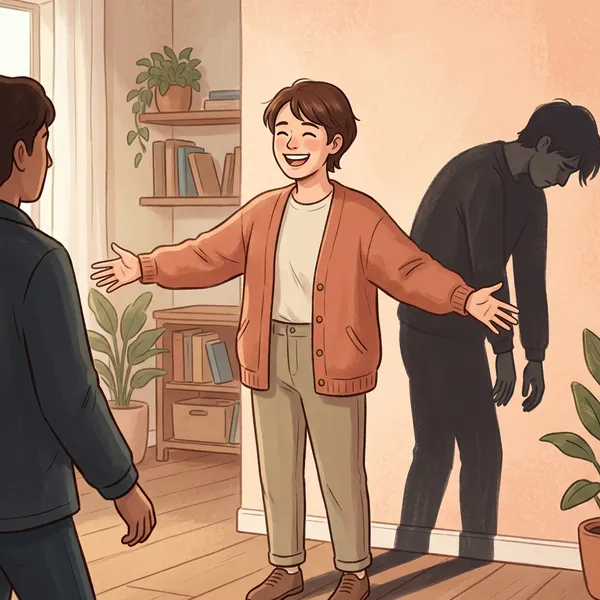
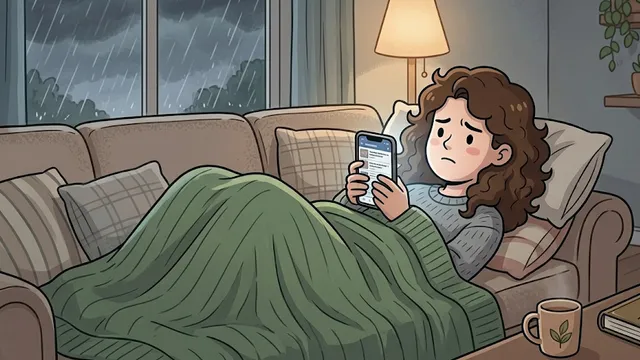
- Strong urges to hide or withdraw. After setbacks or conflict, the impulse is to disappear, shut down, or cut off contact rather than to repair — sometimes shading into the appeasement-driven fawn response, where staying small and acceptable feels safer than being seen.
- Harsh inner critic. The self-talk tone is contemptuous or mocking, not simply firm or corrective.
- Sense of being fundamentally different or broken. Even in close relationships, there can be a persistent feeling of being “on the outside,” or that others only accept a mask.
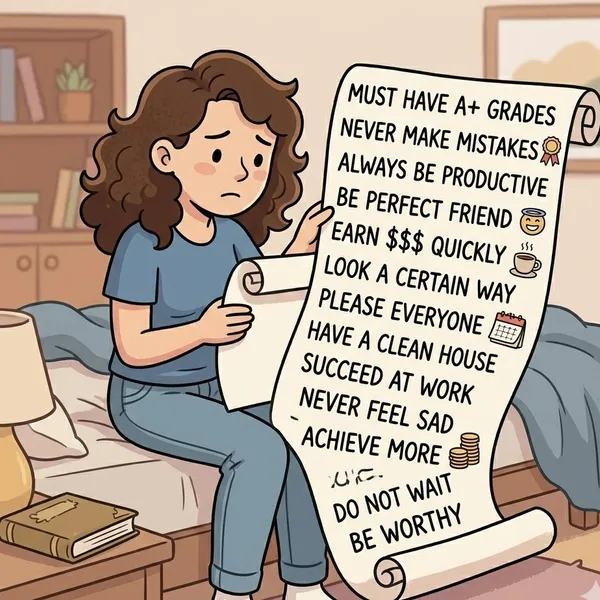
Clinically, internalized shame is linked with higher levels of depression, anxiety, self-harm, disordered eating, and difficulties in intimacy, because it attacks the very sense of being worthy of care and connection. People living with deep shame often develop a fragile, conditional sense of self-worth — feeling acceptable only when performing or pleasing, and worthless when they fall short.
Across multiple studies of moral emotions, Tangney and Dearing (2002; Tangney, Stuewig, & Mashek, 2007) found that shame-prone individuals consistently show higher rates of depression, anxiety, and interpersonal difficulties than guilt-prone individuals — supporting the clinical observation that “I am bad” is far more corrosive than “I did something bad.”
Where Does Internalized Shame Come From?
Shame is deeply interpersonal: it usually begins in relationships. Internalized shame tends to develop when core experiences send repeated messages like “You are too much,” “You’re not enough,” or “Your feelings are unacceptable.” Common pathways include:
- Chronic criticism or humiliation. Growing up with frequent shaming comments about mistakes, appearance, emotions, or needs.
- Conditional acceptance. Feeling valued only when performing, pleasing, or staying “small,” and rejected or mocked when you are authentic.
- Trauma and abuse. In situations where a child is powerless, it is often safer to believe “It’s my fault, I am bad” than to face the reality that caregivers were unsafe or neglectful. The child takes on the blame to preserve some sense of control and attachment.
- Social stigma. Repeated messages from culture or community that aspects of your identity — race, body, gender, orientation, ability, class — are wrong or inferior can be absorbed as personal defectiveness.
Over years, these external messages become an internal voice. Even when the environment changes, the internalized shame script keeps running.
Why Is Guilt Useful While Shame Gets in the Way?
A helpful way to think about it: guilt is about behaviour; shame is about being.
Healthy guilt:
- Focuses on what happened (“I shouted at my partner”).
- Points toward repair and responsibility (“I regret that, I’ll apologise and work on responding differently”).
- Coexists with a basic sense of worth (“I did something out of line with my values, but I’m not irredeemable”).
Internalized shame:
- Focuses on who you are (“I shouted because I’m a terrible partner; I always ruin everything”).
- Leads to attack or avoidance, not repair — self-punishment, withdrawing, or doubling down defensively.
- Erodes the belief that change is possible (“This is just who I am”).
Paradoxically, people who are deeply ashamed often struggle more to change their behaviour, because their energy goes into hiding and self-criticism instead of learning and repair. When the nervous system is convinced you are bad, it becomes hard to imagine acting as someone who deserves care and respect.
How Do You Work With Internalized Shame?
Shame softens slowly. Most evidence-based therapies do not try to “get rid of shame” directly; instead, they change how you relate to it and what you believe it means about you. Helpful directions include:
- Naming shame states. Simply recognising “This is shame” rather than “This is the truth about me” can create a small gap. Often shame has a body signature — collapse, wanting to disappear, hot face, looking down — that you can learn to spot.
- Shifting language from “am” to “did.” Practising more precise inner language: “I missed a deadline” instead of “I’m useless”; “I lied in that situation” instead of “I’m a liar by nature.” This does not minimise responsibility; it locates it in behaviour.
- Exploring the origin of the script. Mapping when you first remember feeling “bad,” what was said or implied, whose voice your inner critic sounds like. The more clearly you see shame as learned, the less inevitable it feels.
- Introducing self-compassion. Responding to mistakes with kindness plus accountability (“I messed up and I can work on this”) supports change far more effectively than contempt. Self-compassion practices are especially useful here because they directly counter the hostile stance of internalized shame.
- Testing new relational experiences. Safe relationships — whether with a therapist, friends, or partners — offer chances to share something you feel ashamed of and experience acceptance instead of rejection. Over time, repeated corrective experiences can update the old belief “If people really know me, they’ll leave.”
When shame is intense, longstanding, or linked with trauma and self-harm, structured support from a therapist or psychologist is important. Approaches such as schema therapy, compassion-focused therapy, EMDR, and some forms of psychodynamic and relational work explicitly target shame and the beliefs that sustain it.
What Does Moving Beyond Shame Look Like?
The goal is not to never feel guilt or shame again; both are part of being human and living in relationship with others. The shift you are aiming for is more subtle and humane:
- From “I am the mistake” to “I made a mistake.”
- From “My flaws make me unlovable” to “My flaws make me human; they also give me work to do.”
- From “If people see the real me, they’ll leave” to “The people who can meet me as I am are the ones I want close.”
When you hold yourself as basically worthy — even while fully accountable — growth becomes safer. You can look at your impact, apologise, and change without needing to destroy yourself in the process. That is the opposite of internalized shame: a grounded sense of dignity that makes room for both imperfection and responsibility.
Key Takeaways
- Guilt focuses on behaviour (“I did something bad”) and motivates repair; shame focuses on identity (“I am bad”) and leads to hiding, self-attack, and avoidance.
- Internalized shame often develops through chronic criticism, conditional acceptance, trauma, or social stigma — external messages that become an internal voice.
- People with high internalized shame often struggle more to change, because their energy goes into self-criticism rather than learning and repair.
- Working with shame involves naming it, shifting from “am” to “did” language, exploring its origins, and building self-compassion.
- The goal is not eliminating shame but moving from “I am the mistake” to “I made a mistake” — holding yourself as worthy while staying accountable.
References
Cook, D. R. (1994). Internalized Shame Scale: Professional manual. Channel Press.
del Rosario, P. M., & White, R. M. (2006). The Internalized Shame Scale: Temporal stability, internal consistency, and principal components analysis. Personality and Individual Differences, 41(1), 95–103.
Gilbert, P. (2010). Compassion focused therapy: Distinctive features. Routledge.
Saya, A., et al. (2022). Positive and psychopathological aspects between shame and psychopathology. Frontiers in Psychology, 13, 941576.
Tangney, J. P., & Dearing, R. L. (2002). Shame and guilt. Guilford Press.
Tangney, J. P., Stuewig, J., & Mashek, D. J. (2007). Moral emotions and moral behavior. Annual Review of Psychology, 58, 345–372.
American Psychological Association. (2023, September 26). What’s the difference between guilt and shame? [Video]. YouTube. https://www.youtube.com/watch?v=itsnF2_7W9g
Franco, J. (2025, July 19). The C-PTSD inner critic: Chronic shame and self-blame. Psychology Today. https://www.psychologytoday.com/au/blog/trauma-resilience-and-recovery/202507/the-c-ptsd-inner-critic-chronic-shame-and-self-blame
Your Therapy With Leah. (2024, October 19). Shame in PTSD and trauma: How compassion offers an antidote. https://yourtherapywithleah.co.uk/shame-in-ptsd-and-trauma/
MI-Psych. (2025, July 17). Compassion Focused Therapy (CFT): Healing shame and self-criticism. https://mi-psych.com.au/therapies/compassion-focused-therapy/
You might also like