Rumination vs. Reflection: Know the Difference

Rumination is repetitive, passive, self-critical thinking that loops around problems or feelings without reaching insight or action — and decades of research, including the work of psychologist Susan Nolen-Hoeksema, links it reliably to worsening depression and anxiety. Reflection is purposeful, time-limited thinking oriented toward understanding and next steps. Both involve thinking deeply, but their tone, direction, and outcomes are very different.
Thinking things through is generally considered a good idea. But anyone who has spent hours replaying a conversation, rehearsing worst-case scenarios, or asking themselves “What’s wrong with me?” knows that not all thinking is created equal. The difference between rumination and reflection is one of the most practically useful distinctions in clinical psychology — and learning to tell them apart can change how you relate to difficult experiences.
What Do We Mean by Rumination and Reflection?
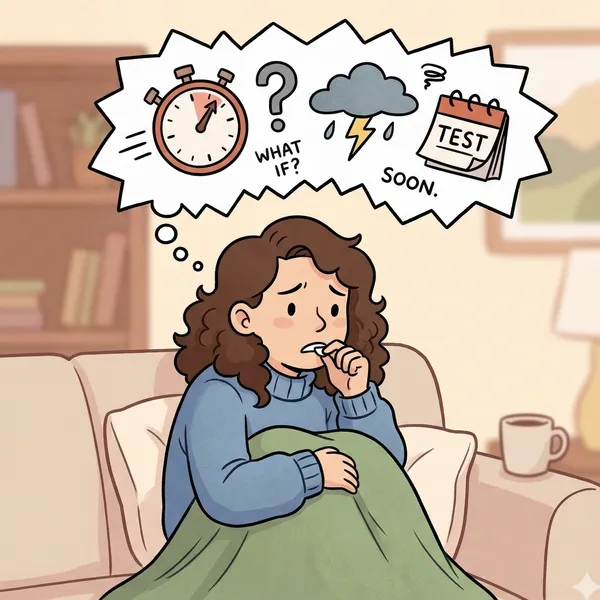
In psychology, rumination usually refers to repetitive, passive, and negative thinking about problems, feelings, or past events—without moving toward resolution or action. It often sounds like “Why am I like this?”, “What’s wrong with me?”, or replaying the same scenario over and over with no new insight.
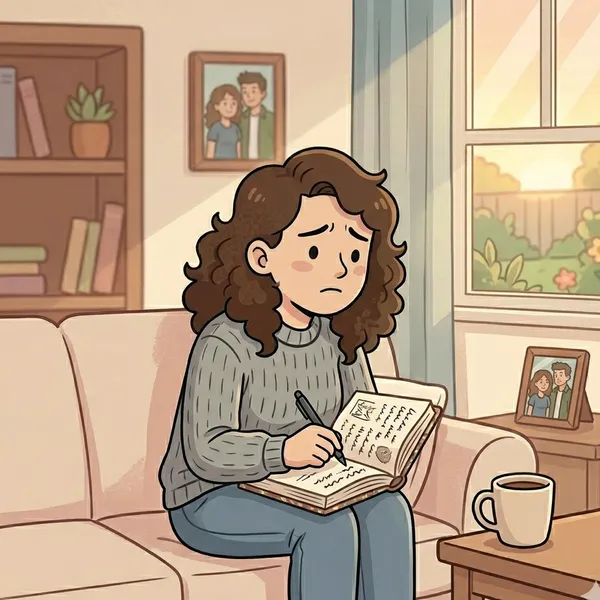
Reflection, on the other hand, is a more purposeful and constructive process of examining experiences to learn from them, generate options, and integrate emotions. Reflective thinking stays oriented toward understanding and potential change: “What did I learn?”, “What would I like to do differently next time?” The thoughts may still be serious or painful, but they are organised around meaning-making rather than self-attack.
Why Does Rumination Make Things Worse?
Response Styles Theory suggests that how we respond to low mood plays a key role in whether that mood deepens or lifts. Susan Nolen-Hoeksema’s work defined rumination as repeatedly and passively focusing on the causes, consequences, and symptoms of one’s distress—especially one’s depressed mood—without engaging in active problem-solving.
Across many studies, higher levels of rumination predict:
- More severe and longer-lasting depressive episodes.
- Increased anxiety and worry.
- Greater risk of suicidal ideation.
- Impaired social problem-solving and more interpersonal difficulties.
A particular subtype called brooding—a moody, critical dwelling on problems and perceived failures—shows especially strong associations with depression and anxiety, whereas more neutral, analytical pondering appears less harmful. In other words, it is not thinking deeply itself that is the problem, but the style of thinking and what it is oriented toward.
How Does Reflection Help You Adapt and Grow?
Constructive self-reflection is still a form of focused attention on your inner world, but it differs from rumination in several key ways: it is more intentional, time-limited, balanced, and oriented toward learning.
Research and clinical models suggest that reflective thinking can support:
- Better problem-solving. Deliberate reflection about what happened, why, and what options exist makes it easier to generate concrete next steps instead of staying stuck in “why” questions.
- Greater self-understanding. Integrating thoughts, feelings, and context can clarify needs, values, and patterns, which in turn supports more aligned decisions.
- Emotional regulation. Naming and exploring feelings in a structured way can reduce their intensity over time, particularly when combined with self-compassion and perspective-taking.
Some theorists describe adaptive reflection as “productive introspection”: it may be uncomfortable, but it leads somewhere—new understanding, specific plans, or a shift in how you relate to the situation.
How Can You Tell Which One You Are Doing?
From the inside, rumination and reflection can feel similar because both involve thinking a lot about something. Helpful questions for distinguishing them include:
Is my thinking moving or looping?
- Reflection tends to progress: you notice new angles, consider alternatives, or arrive at a clearer sense of what matters.
- Rumination feels like circling the same track with rising distress and no new insight.
What is the tone of my inner voice?
- Reflection can be honest and even critical, but it is generally curious and problem-focused.
- Rumination is often harsh, shaming, or hopeless: “This always happens,” “There’s something wrong with me.”
Is there a sense of agency?
- Reflection usually leads toward questions like “What can I try?” or “What support might help?”
- Rumination stays stuck in “Why?” and “What if?” without translating into experiments or requests for help.
If, after thinking about something, you consistently feel more hopeless, stuck, or agitated, and no closer to action, there is a good chance rumination is running the show. This kind of loop is especially common in anticipatory anxiety, where the mind rehearses worst-case scenarios about future events.
How Can You Shift From Rumination to Reflection?
Because rumination is a well-practised habit for many people, shifting it requires both cognitive and behavioural strategies. Evidence-based approaches often draw on CBT and related models:
- Set gentle limits on “thinking time.” Scheduling brief, contained periods for reflection (for example, 10–15 minutes of journaling) can reduce all-day rumination and make thinking more intentional.
- Move from “why” to “what now.” When you notice repetitive “Why am I like this?” loops, gently redirect to questions like “Given that this happened, what small step would help me cope or learn?”
- Engage in alternative activities. Distraction is not always avoidance; in Response Styles Theory, shifting attention toward neutral or positive activities can interrupt rumination enough to allow problem-solving later.
- Use a structured reflection framework. Simple prompts such as “What happened? What did I feel? What did I learn? What do I want to try next time?” encourage movement from replaying to integrating.
- Bring in self-compassion. Adopting a kinder internal stance reduces the self-attacking element that turns reflection into rumination and is associated with better emotional outcomes.
- Try cognitive defusion. Acceptance and Commitment Therapy techniques such as labelling thoughts (“I’m having the thought that…”) create a small psychological gap between you and the loop, making it easier to step out of repetitive thinking without arguing with the content.
In their influential review of the rumination literature, Nolen-Hoeksema, Wisco, and Lyubomirsky (2008) concluded that rumination predicts the onset, severity, and duration of depressive episodes across multiple longitudinal studies, often more strongly than the symptoms it accompanies. Subsequent factor-analytic work — including Armey, Fresco, and Moore (2009) and Whitmer and Gotlib (2011) — has consistently distinguished two components: brooding (passive, comparison-focused, self-critical) and reflection (purposeful, problem-solving), with brooding the component most strongly tied to depression risk.
When rumination is severe, persistent, or linked with significant depression, anxiety, or trauma, working with a mental wellbeing professional can provide more tailored strategies and address underlying core beliefs that keep the cycle in place.
Key Takeaways
- Rumination is repetitive, passive, and self-critical thinking that loops without reaching insight or action—and it reliably worsens depression and anxiety.
- Reflection is purposeful, time-limited thinking oriented toward understanding, learning, and next steps.
- Both involve deep thinking, but they differ in tone, direction, and outcome.
- You can distinguish them by asking: is my thinking moving or looping? Is the tone curious or shaming? Do I feel closer to action or further from it?
- Shifting from rumination to reflection involves setting limits on thinking time, redirecting from “why” to “what now,” using structured prompts, and practising self-compassion.
References
-
Armey, M. F., Fresco, D. M., & Moore, M. T. (2009). Brooding and pondering: Isolating the active ingredients of depressive rumination with exploratory factor analysis and structural equation modeling. Assessment, 16(4), 315–327.
-
Nolen-Hoeksema, S., Wisco, B. E., & Lyubomirsky, S. (2008). Rethinking rumination. Perspectives on Psychological Science, 3(5), 400–424.
-
Papageorgiou, C., & Wells, A. (2003). An empirical test of a clinical metacognitive model of rumination and depression. Cognitive Therapy and Research, 27(3), 261–273.
-
Smith, J. M., & Alloy, L. B. (2009). A roadmap to rumination: A review of the definition, assessment, and conceptualization of this multifaceted construct. Clinical Psychology Review, 29(2), 116–128.
-
Watkins, E. R. (2008). Constructive and unconstructive repetitive thought. Psychological Bulletin, 134(2), 163–206.
-
Whitmer, A. J., & Gotlib, I. H. (2011). Brooding and reflection reconsidered: A factor analytic examination of rumination in currently depressed, formerly depressed, and never-depressed individuals. Cognitive Therapy and Research, 35(2), 99–107.
-
The Open University. (2008). Exploring depression: Models of rumination (Section 3.5). https://www.open.edu/openlearn/science-maths-technology/exploring-depression/content-section-3.5
-
Psychiatry.org. (n.d.). Rumination: A cycle of negative thinking. American Psychiatric Association. https://www.psychiatry.org/news-room/apa-blogs/rumination-a-cycle-of-negative-thinking
-
Child Focus. (2023, February 19). What is the difference between self-reflection and rumination? https://www.child-focus.org/news/what-is-the-difference-between-self-reflection-and-rumination-constructive-vs-destructive-thoughts
-
ICACOACH. (n.d.). Reflection vs. rumination. https://icacoach.com/coach-portfolios/power-tools/reflection-vs-rumination/
You might also like