Anticipatory Anxiety: Living in the Future

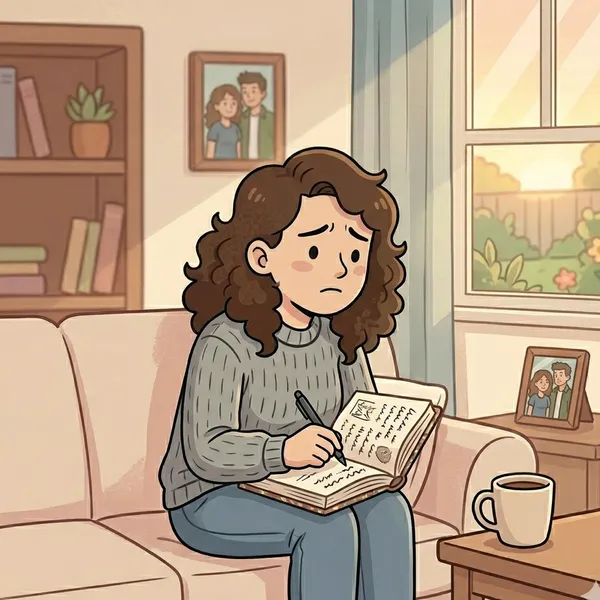
Anticipatory anxiety is the fear and dread you feel before a future event, driven by imagined worst-case scenarios. It is not a separate diagnosis but a pattern that shows up across many anxiety-related experiences — panic disorder, social anxiety, OCD — and in everyday life. It can quietly shape decisions, routines, and relationships, often without you realising you are living in reaction to a future that has not happened yet.
Most of us know what it’s like to feel nervous before something important. But for some people, the time before an event is far more distressing than the event itself. That intense, “what if everything goes wrong?” worry is the territory of anticipatory anxiety, and learning to recognise it is the first step in changing your relationship with it.
What Is Anticipatory Anxiety?
Anticipatory anxiety is the fear and dread you feel before a future event or situation, driven by imagined worst-case scenarios.
It might show up as:
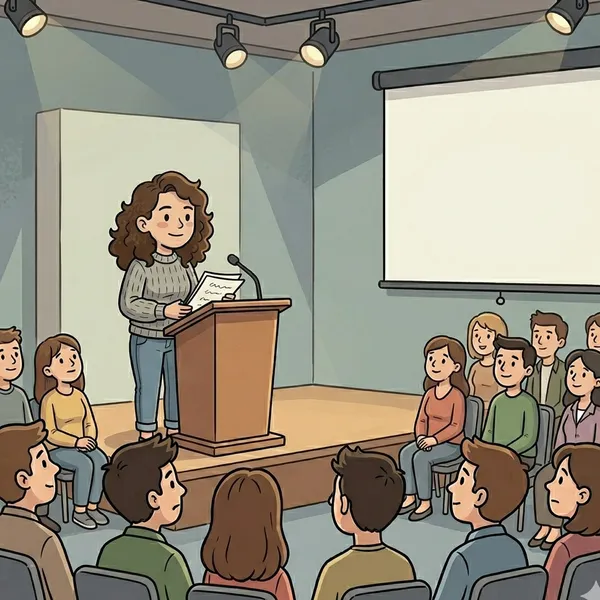
- Worrying for days before a presentation, replaying every possible mistake.
- Feeling sick to your stomach the week before a medical appointment.
- Mentally rehearsing difficult conversations over and over, then avoiding them.
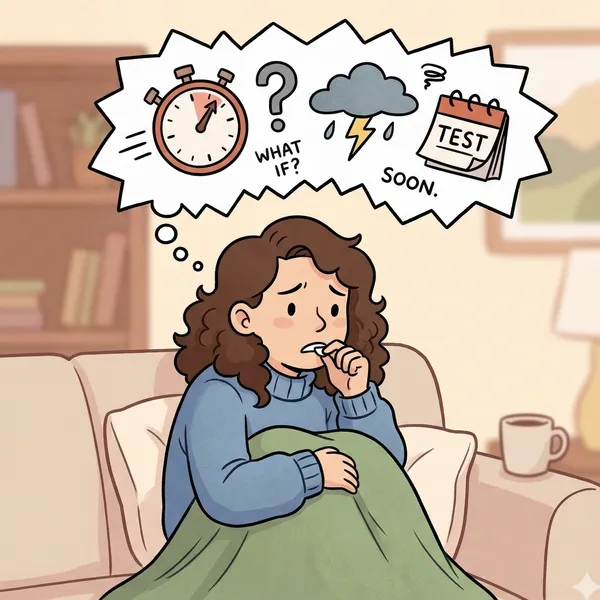
- Lying awake thinking, “What if I panic on the train?” or “What if I embarrass myself at that party?”
The common thread is that your mind leaves the present and spends a lot of time in a future that feels threatening, even when nothing dangerous is happening right now.
What Are the Common Symptoms of Anticipatory Anxiety?
Anticipatory anxiety affects both body and mind. People often describe:
Psychological symptoms
- Persistent “what if…” worry about upcoming situations.
- Difficulty concentrating, mental fog, racing thoughts.
- Irritability, feeling “on edge,” or emotionally raw.
- Strong urge to avoid or cancel the thing you’re worried about.
Physical symptoms
- Tight chest, heart racing, shortness of breath.
- Nausea, stomach pain, or feeling like you might be sick.
- Sweaty palms, shaking, or restlessness.
- Trouble falling or staying asleep because your mind won’t switch off.
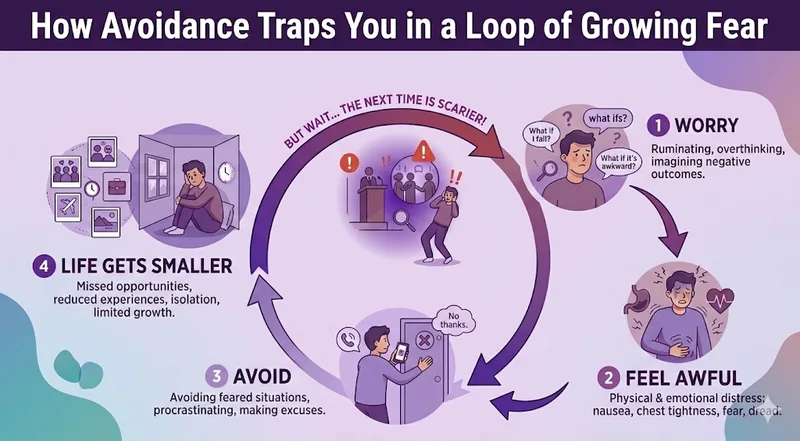
Over time, this can turn into a cycle: you worry → you feel awful → you avoid → life gets smaller → the next similar situation feels even more threatening.
Why Does Anticipatory Anxiety Happen?
Several factors can feed anticipatory anxiety:
Avoidance
Avoiding feared situations gives short-term relief but reinforces the idea that “I couldn’t handle it,” which makes future anticipatory anxiety stronger.
Past experiences
If you’ve had a panic attack, a painful medical procedure, or a socially humiliating moment, your brain learns “this situation = danger” and starts sounding the alarm early.
Fear of the unknown
Uncertainty is uncomfortable. When you don’t know what will happen, your mind often fills the gap with the worst possible outcome.
Overestimating threat, underestimating coping
Many people with anticipatory anxiety overestimate how bad things will be and underestimate their own ability to handle them.
Underlying conditions
Anticipatory anxiety can be part of panic disorder, social anxiety, PTSD, OCD, and other conditions where the mind is constantly scanning for danger. It is also commonly fuelled by long-standing core beliefs such as “I cannot cope,” “something bad will happen,” or “I’m not safe unless I prepare for the worst.”
What’s happening in the brain
In an integrative review, Grupe and Nitschke (2013) describe anticipatory anxiety as a neurobiological state involving heightened activity in the bed nucleus of the stria terminalis (BNST), amygdala, and insula, combined with sustained vigilance for potential threat — a system optimised to help us survive uncertainty, but easily hijacked by chronic worry. From a behavioural standpoint, Borkovec, Alcaine, and Behar (2004) frame chronic worry as a learned avoidance strategy — by staying in our heads, we get short-term relief from more vivid emotional and physiological distress, which paradoxically reinforces the worry loop over time.
What Are Evidence-Based Ways to Manage Anticipatory Anxiety?
The good news: anticipatory anxiety is manageable. A combination of psychological strategies, lifestyle changes, and, when needed, professional support can make a real difference.
1. Name it and normalise it
Simply recognising “this is anticipatory anxiety” can reduce some of its power. You’re not “going crazy”; your brain is trying (a bit too hard) to protect you from imagined danger.
Try reframing:
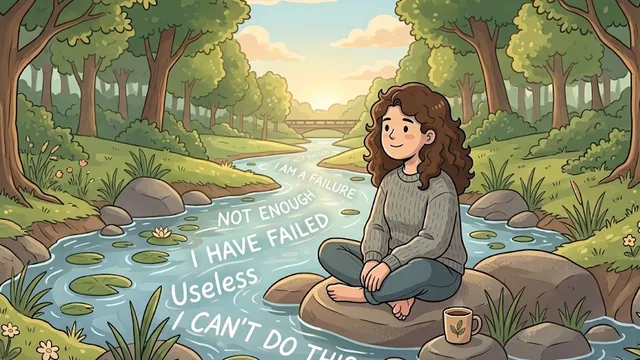
“My brain is predicting disaster. That’s a prediction, not a fact.”
2. Ground yourself in the present
Because anticipatory anxiety pulls you into the future, grounding skills pull you back:
- Breathing exercises: Slow, diaphragmatic breathing or box breathing.
- Sensory grounding: Notice 5 things you can see, 4 you can feel, 3 you can hear, 2 you can smell, 1 you can taste.
- Mindfulness: Briefly observe thoughts like “here is my mind doing ‘what if’ again,” without having to follow every scenario.
These don’t erase anxiety, but they create enough space to choose your response instead of reacting automatically. If you notice your mind replaying the same worries over and over, it may help to understand the difference between rumination and reflection.
3. Challenge catastrophic thoughts (CBT)
Cognitive Behavioural Therapy (CBT) has strong evidence for anxiety. The basic idea:
Identify the thought: “If I mess up this presentation, everyone will think I’m incompetent and I’ll lose my job.”
Examine the evidence:
- Have you always lost your job after a mistake?
- How do people usually respond when someone stumbles over a word in a presentation?
Create a more balanced alternative: “I might feel anxious and make a minor mistake, but most people will forget it quickly, and I can still do a good job overall.”
4. Gradual exposure instead of avoidance
Avoidance keeps anticipatory anxiety strong. Exposure-based approaches gently reverse this:
- Start by creating a ladder of steps toward the feared situation, from easiest to hardest.
- Practice approaching the moderate steps while using your coping skills (breathing, grounding).
- As you gain evidence that you can handle it, anticipatory anxiety usually decreases.
For example, if you fear giving a talk, you might start by speaking up once in a small meeting, then recording yourself at home, then presenting to a trusted friend, and only later to a bigger group.
5. Take care of your nervous system
Lifestyle factors won’t cure anxiety, but they can make your baseline more resilient:
- Regular sleep and a consistent wake time.
- Movement or exercise that you actually enjoy (this is a big one!).
- Reducing caffeine and alcohol if you notice they worsen anxiety.
- Building small, predictable routines so not everything feels uncertain.
6. Seek support when you need it
Talking about anticipatory anxiety with trusted people or a professional can break isolation and shame. A qualified professional can:
- Help you map your patterns and triggers.
- Teach you CBT and exposure strategies tailored to your situation.
- Explore whether additional support might help if anxiety is severe or linked to another condition.
If your anxiety leads to frequent panic attacks, severe avoidance (e.g., you stop leaving home), or thoughts of self-harm, it’s important to seek support promptly.
When Should You Get Support for Anticipatory Anxiety?
You should consider getting professional support when anticipatory anxiety regularly changes what you do: cancelling plans, avoiding work or school tasks, losing sleep for days before an event, relying on reassurance to get through the week, or feeling unable to make ordinary decisions because of future-focused fear.
It is especially important to seek help promptly if anxiety comes with frequent panic attacks, severe avoidance, trauma symptoms, intrusive thoughts, substance use to cope, or any thoughts of self-harm. A qualified therapist or doctor can help you understand what is happening and choose support that fits the pattern, rather than trying to manage it alone.
You Don’t Have to Know the Future to Move Forward
Anticipatory anxiety convinces you that the only way to be safe is to predict and control everything. Real safety and freedom come more from learning that you can handle uncertainty and discomfort — one step at a time.
You don’t need to eliminate worry before you act. You can:
- Notice “here comes anticipatory anxiety.”
- Ground yourself in the present.
- Question the most catastrophic “what ifs.”
- Take small, values-based actions anyway.
Over time, your brain learns a new lesson: “I don’t need to predict every outcome. I can meet things as they come.” Practising self-compassion along the way can make the process feel less like a battle and more like a gradual shift.
Key Takeaways
- Anticipatory anxiety is the fear and dread before a future event, driven by worst-case thinking — it’s a pattern, not a separate diagnosis
- It affects both mind (racing thoughts, “what if” worry, avoidance urges) and body (racing heart, nausea, insomnia)
- Avoidance gives short-term relief but makes anticipatory anxiety stronger over time
- Grounding techniques, CBT-based thought challenging, and gradual exposure are all evidence-based strategies
- Lifestyle factors like sleep, movement, and reducing caffeine can lower your baseline anxiety
- If anticipatory anxiety is significantly affecting your daily life, speaking with a qualified professional can help
References
-
Grupe, D. W., & Nitschke, J. B. (2013). Uncertainty and anticipation in anxiety: An integrated neurobiological and psychological perspective. Nature Reviews Neuroscience, 14(7), 488–501.
-
Borkovec, T. D., Alcaine, O., & Behar, E. (2004). Avoidance theory of worry and generalized anxiety disorder. In R. G. Heimberg, C. L. Turk, & D. S. Mennin (Eds.), Generalized anxiety disorder: Advances in research and practice (pp. 77–108). Guilford Press.
-
Hofmann, S. G., Asnaani, A., Vonk, I. J. J., Sawyer, A. T., & Fang, A. (2012). The efficacy of cognitive behavioral therapy: A review of meta-analyses. Cognitive Therapy and Research, 36(5), 427–440.
-
American Psychiatric Association. (2022). Diagnostic and statistical manual of mental disorders (5th ed., text rev.). American Psychiatric Publishing.
-
National Institute for Health and Care Excellence. (2011, updated). Generalised anxiety disorder and panic disorder in adults: Management (Clinical guideline CG113). https://www.nice.org.uk/guidance/cg113
You might also like